Functional and Beautiful Retaining Walls
Retaining walls solve real problems while adding structure and beauty to your property. Sloped yards waste space and create erosion issues. Water runs down slopes, carving channels and washing away soil. Mowing and maintaining steep slopes is difficult and dangerous. A well-designed retaining wall transforms unusable slope into level, functional space while controlling erosion and managing water flow.
Here in Mount Juliet, we see many properties with challenging slopes. Tennessee terrain naturally creates elevation changes that need management. Concrete retaining walls let you build patios on slopes, create terraced gardens, level driveways, and protect foundations from hillside erosion. The right wall turns a problem into an asset and can even become a striking focal point in your landscaping.
Retaining walls are not simple projects. They must resist tremendous pressure from the soil behind them. Water accumulation increases this pressure and can cause walls to fail if not properly managed. Poor drainage is the main reason retaining walls fail. We design and build walls with proper drainage systems, adequate structural support, and appropriate materials for your specific situation.
We build retaining walls using several materials depending on your needs and preferences. Concrete block walls offer strength and versatility with many style options. Poured concrete walls provide maximum strength for tall walls or heavy loads. Stone veneer over concrete combines structural integrity with natural beauty. Each approach has advantages, and we help you choose the best option for your property and budget.
Retaining Wall Options and Applications
Segmental concrete block walls use modular units that interlock without mortar. These blocks come in many colors, textures, and styles, from natural stone looks to smooth contemporary finishes. A block retaining wall works well for most residential applications and heights up to 4-6 feet. They allow some flexibility to follow curves and irregular terrain. The modular nature also makes future modifications easier if needed.
Poured concrete walls provide maximum strength and work for any height. We build forms, place reinforcement, and pour concrete to create monolithic walls that resist tremendous pressure. These walls work great for tall applications, heavy loads, or where you need a completely solid barrier. The smooth concrete surface can be left natural, painted, or covered with stone or brick veneer for a custom look.
Concrete masonry unit walls use traditional concrete blocks with mortar joints. These walls offer excellent strength and can be built to any height. The blocks can be left exposed for an industrial look, covered with stucco or stone veneer, or painted to match your home. CMU walls work particularly well for commercial applications or where building codes require specific construction methods.
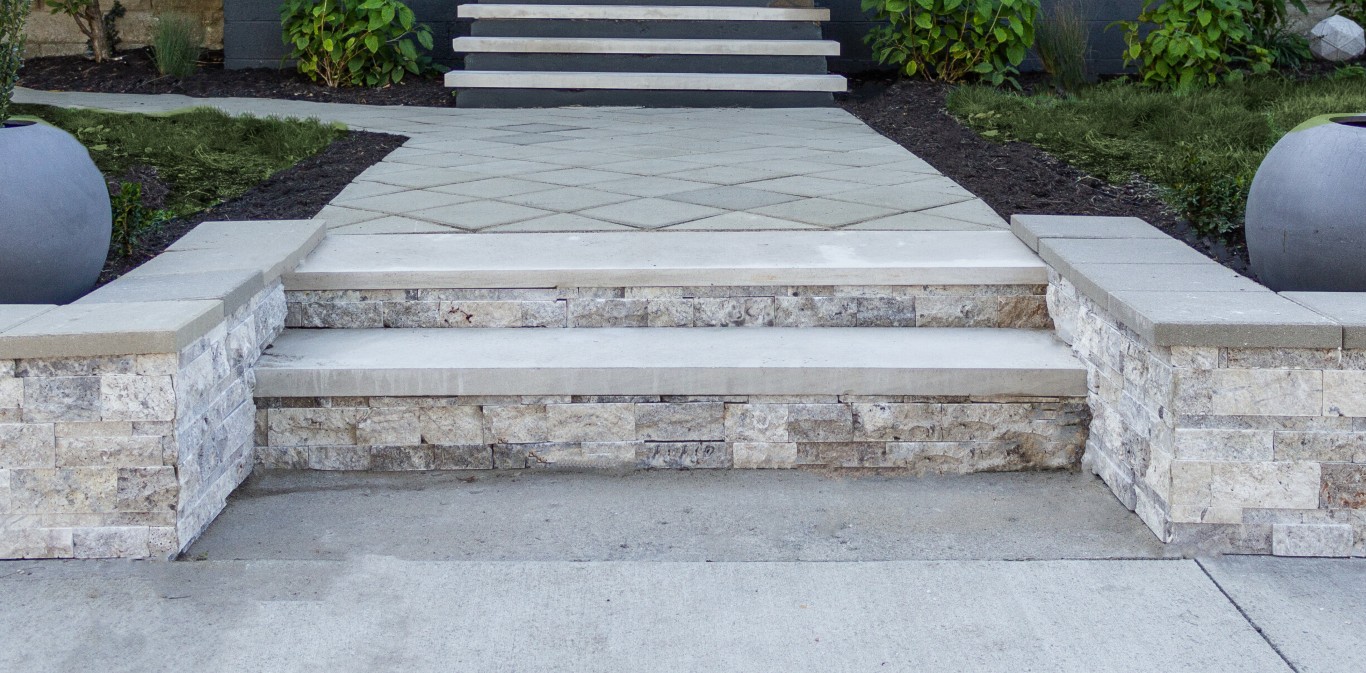
Decorative stone veneer over concrete combines the strength of concrete or CMU with the appearance of natural stone. This approach gives you the beauty of stone without the complexity and expense of building with natural stone blocks. The concrete structure provides strength and stability while the stone veneer creates the look you want. This combination works especially well for highly visible walls where appearance matters.
Common Retaining Wall Applications
- Terraced yards creating multiple level areas from sloped lots
- Driveway cuts into hillsides with walls supporting the uphill side
- Patio and pool surrounds built into slopes for level outdoor spaces
- Foundation protection preventing erosion near house walls
- Landscape features defining gardens and creating planting beds
- Erosion control on creek banks and drainage channels
Engineering for Long-Term Performance
Retaining wall design depends on wall height, soil type, and what sits on top of the retained soil. Properly engineered concrete retaining walls account for all three of those factors before a single block gets set. Taller walls need stronger construction and better drainage. Clay soils create more pressure than sandy soils. Slopes with driveways or buildings on top need walls engineered for these additional loads. We evaluate all these factors and design walls appropriately.
Many jurisdictions require engineering and permits for retaining walls above certain heights, typically 4 feet. We work with structural engineers when required and handle all permit applications. The engineering ensures your wall is properly designed for the specific conditions at your property. This documentation also protects you if issues arise and proves the wall was built to professional standards.
Drainage is the most critical aspect of retaining wall design. Water builds up behind walls and creates tremendous pressure called hydrostatic pressure. Without proper drainage, this pressure pushes walls over or causes them to crack and fail. We install drainage systems behind every wall to collect water and channel it away. This includes gravel backfill, perforated drain pipes, and weep holes or drainage outlets.
Base preparation determines how well your wall performs long term. We excavate below the frost line to prevent heaving. A compacted gravel base provides a stable, draining foundation for the wall. The base must be level and properly prepared because you cannot fix it after the wall is built. This foundation work is not visible in the finished wall but makes all the difference in performance.
How We Build Retaining Walls
Every retaining wall project starts with careful site evaluation and planning. We examine your slope, test the soil, and identify any drainage issues. Then we design a wall that solves your specific problems while fitting your aesthetic preferences and budget. For walls requiring engineering, we coordinate with structural engineers and handle permit applications.
Excavation is the first construction step. We dig into the slope to create a level area for the wall base and remove material from behind where the wall will sit. This excavation must be precise because it determines the wall's final position and grade. We also identify and protect any utilities in the area before digging.
Base installation follows excavation. We place and compact gravel to create a stable, level foundation. The base thickness depends on wall height and soil conditions. For taller walls or poor soils, we may pour a concrete footing for additional support. This foundation must be right because everything built on top depends on it.
Wall construction methods vary by wall type. Block walls get built course by course with each row set back slightly to create a stable lean into the slope. Poured walls require forming, reinforcement placement, and concrete placement. CMU walls use mortar joints with reinforcement and grout in cells for added strength. Every method requires attention to detail and experienced crews who understand structural requirements.
Drainage installation happens as we build. We place gravel behind the wall, install drain pipes, and ensure water can exit through the wall or around the ends. This drainage system is critical to wall performance. We also coordinate drainage with your property's overall water management to prevent problems elsewhere.
Backfilling and compaction complete the structural work. We use suitable fill material and compact it in layers to prevent settling. Poor backfilling can undermine even the best wall. Finally, we clean up, restore landscaping where possible, and provide guidance on maintaining your new retaining wall.
Other Concrete Masonry Services
Beyond retaining walls, we handle various concrete masonry projects. Privacy walls create secluded outdoor spaces. Garden walls define planting areas and add vertical interest to flat yards. Seat walls around patios provide built-in seating and architectural detail. These structures add functionality and beauty to your outdoor spaces.
Outdoor fireplaces and fire pits bring warmth and ambiance to your yard. We build the masonry structures that house these features, ensuring proper dimensions, clearances, and ventilation. Whether you want a simple fire pit surround or an elaborate outdoor fireplace with seating areas, we create structures that are both beautiful and functional.
Columns and pillars add architectural interest to entries, driveways, and patios. We build these features to match your home's style, from simple square columns to elaborate curved designs. Masonry columns can support structures like pergolas or serve purely decorative purposes. Either way, they create impressive focal points that enhance your property's appearance.
Solve Your Slope Problems with Expert Retaining Walls
Turn challenging slopes into functional, beautiful spaces with professionally built retaining walls. We provide free consultations and help you find the best solution for your property.