When Your Concrete Needs Attention
Concrete is incredibly durable, but it does not last forever. Cracks develop from settling, tree roots, or freeze-thaw cycles. Surfaces become uneven as soil underneath shifts. Edges crumble from years of weathering and traffic. When your concrete shows these signs of wear, you need to decide whether to repair or replace it. That choice depends on the extent of damage and how much life your concrete has left.
Small problems caught early are usually easy and inexpensive to fix. A crack sealed today stays small. Ignored, that same crack spreads and allows water underneath, leading to bigger problems that require more extensive repairs or full replacement. This is especially true for structural issues — timely foundation crack repair stops water intrusion before it undermines the base entirely. We help you understand what is happening with your concrete and recommend the most cost-effective solution.
Not every cracked driveway or patio needs complete replacement. Modern repair techniques can restore appearance and function at a fraction of replacement cost. We evaluate your concrete honestly and tell you whether repair makes sense or if replacement is the better choice. Sometimes repair is throwing good money after bad. Other times, a repair extends the life of your concrete by many years.
Here in Mount Juliet, we see certain concrete problems repeatedly. Our clay soil causes settling issues. Freeze-thaw cycles create surface spalling. Tree roots lift sections of sidewalks and walkways. Water runoff erodes the base under driveways. Knowing these common problems helps us diagnose issues quickly and recommend proven solutions that work in our local conditions.
Concrete Repair Options
Crack repair is our most common service. Small cracks get filled with flexible sealants that move with the concrete as temperatures change. Larger cracks may need routing to create a proper reservoir for the repair material. We match the repair material to your concrete color so repairs blend in rather than standing out. Properly repaired cracks stop water infiltration and prevent the crack from spreading.
Surface damage like spalling or scaling requires different techniques. Spalling happens when the concrete surface flakes or pops off, usually from freeze-thaw damage or deicing salt exposure. We remove the damaged surface layer and apply a bonded overlay that restores the surface to level and strong condition. The overlay can match your existing concrete or provide an opportunity to add color and texture.
Uneven concrete creates trip hazards and drainage problems. Mudjacking or slabjacking lifts settled sections back to their original height by pumping material underneath. This process costs far less than replacement and completes in hours rather than days. The results are immediate, and you can use the concrete right away. Not all settling can be fixed this way, but when it works, it is the most economical solution.
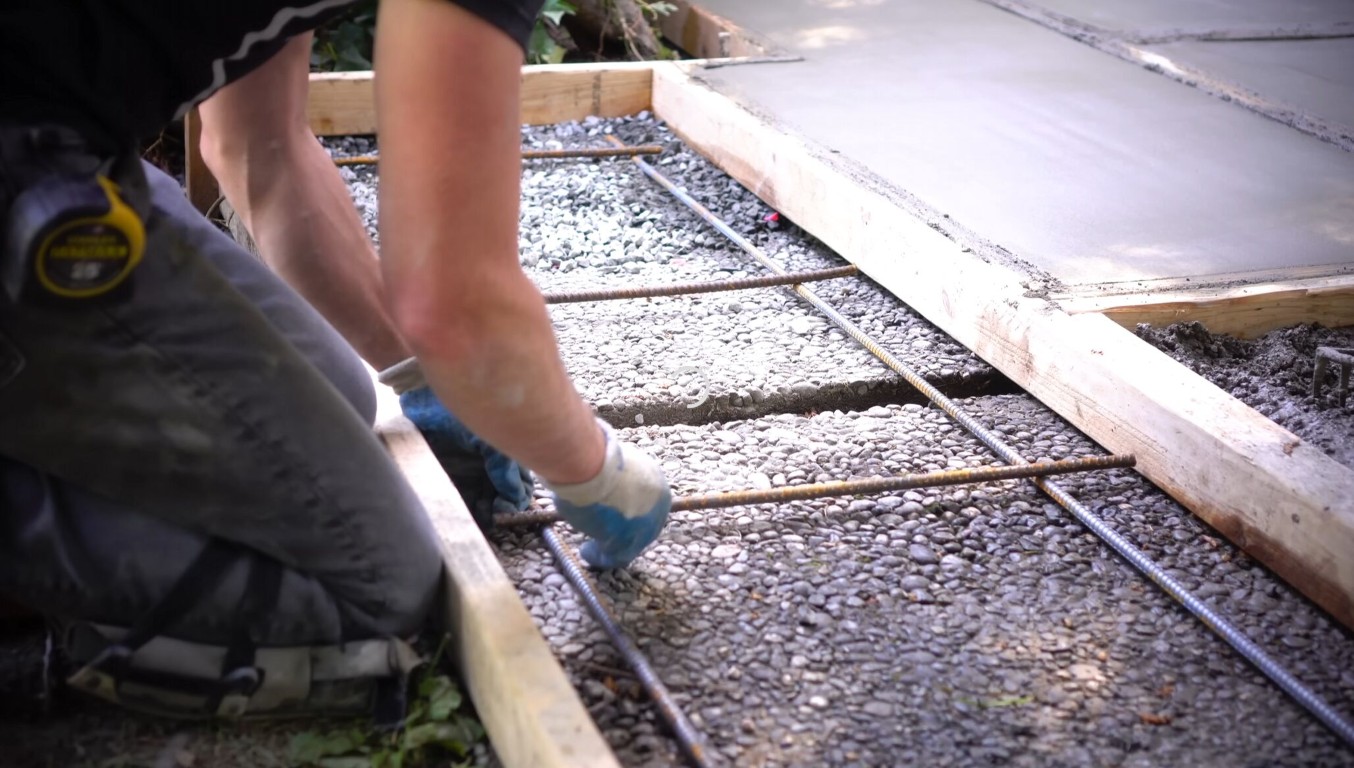
Edge repair fixes crumbling or broken edges on driveways, steps, and patios. These areas take concentrated abuse from traffic and weather. We remove the damaged edge, install forms, and pour new concrete that bonds to the existing surface. Proper reinforcement and finishing ensure the repair lasts as long as the original concrete.
Signs Your Concrete Needs Repair
- Cracks wider than a quarter inch or cracks that are growing
- Sections that have settled creating uneven surfaces or trip hazards
- Surface spalling where the concrete surface is flaking off
- Crumbling edges that worsen with each season
- Water pooling on surfaces that used to drain properly
- Exposed aggregate or rebar showing through the surface
When Replacement Makes More Sense
Some concrete is beyond saving. Extensive cracking throughout a slab means the base has failed. Multiple settled sections indicate widespread soil problems. Severe surface deterioration goes too deep for overlays to work. When we see these conditions, we recommend replacement rather than trying to patch up concrete that will continue failing.
Replacement also makes sense when you want to change the size, shape, or function of your concrete. A narrow driveway that needs widening requires removal and replacement. A plain patio you want to upgrade to stamped concrete works better as a replacement project. Sometimes starting fresh gives you better results than trying to work with existing concrete.
We handle the entire replacement process. First, we saw cut the old concrete into manageable sections and haul it away. Then we evaluate the base and make any necessary improvements before pouring new concrete. This approach ensures your new concrete performs better than what it replaced. We address the problems that caused the original failure so you get a long-lasting result.
Replacement projects follow the same careful procedures we use for new construction. Proper site preparation, adequate base compaction, correct concrete specifications, and quality finishing all contribute to a superior final product. Your replacement concrete should last 30 years or more with minimal maintenance.
How We Help You Decide
Every repair or replacement consultation starts with a thorough inspection. We look at the visible damage and also probe to understand what is happening underneath. Tapping on concrete with a hammer reveals hollow spots where the base has eroded. Checking for movement shows whether sections are stable or still settling. This investigation tells us what is really going on with your concrete.
Then we provide honest recommendations. We explain what we found, why it happened, and your options for fixing it. You will get prices for both repair and replacement so you can make an informed decision. We never push unnecessary replacement when repair will work, but we also will not recommend repairs that are just delaying inevitable replacement.
Cost matters, but so does long-term value. A cheap repair that lasts two years costs more in the long run than a proper repair or replacement that lasts decades. We help you understand the trade-offs so you can choose the solution that makes the most sense for your situation and budget. Our goal is fixing your concrete problem permanently, not just temporarily.
Preventing Future Concrete Problems
Many concrete problems are preventable with proper maintenance and drainage. Keep water flowing away from your concrete surfaces. Clean out drainage channels and gutters so water does not pool around concrete edges. Reseal concrete every few years to prevent moisture infiltration. These simple steps significantly extend concrete life.
Watch for small problems before they become big ones. A hairline crack this year becomes a major crack next year if ignored. Small edge chips grow into large breaks. Slight settling becomes a major trip hazard. Quick action on small problems prevents expensive repairs later. We offer inspection services to catch problems early when they are cheapest to fix.
Tree roots are a major cause of concrete damage. If you have trees near your concrete surfaces, watch for signs of root intrusion like cracks or lifting. Sometimes root barriers or tree removal becomes necessary to protect your concrete. We help you identify these situations before extensive damage occurs.
Fix Your Concrete Problems Today
Get expert evaluation and honest recommendations for repairing or replacing your damaged concrete. We provide free estimates and answer all your questions.